
Music genre
What Is K-Pop? Genre, Artists & Songs
The short answer
K-pop is South Korean pop music built around trained idol groups, polished choreography and genre-blending production aimed at a global audience.
Live genre mix
Genre mix: what South Korea streams today
Every day musicpiechart records the genre families behind Spotify's daily charts. The pie is the latest mix; the chart under it shows how that mix moved.
What South Korea is streaming today
Genre mix of Spotify's daily top 200, by streams, on October 7, 2026 · updated 7 Oct
- K-Pop 66%
- Soundtrack & Classical 8%
- Pop 6%
- R&B & Soul 5%
- Hip-Hop & Rap 3%
- J-Pop & Anime 3%
- Other 9%
Genre share over 22 recorded days
September 16 to October 7, 2026. Each band is one genre family's share of the chart's daily streams, stacked to 100%; a missing day leaves a gap.
- K-Pop 66.4% · -1.7 pts
- Soundtrack & Classical 7.5% · +2.1 pts
- Pop 6.3% · +0.3 pts
- Hip-Hop & Rap 3.0% · -0.9 pts
- R&B & Soul 5.3% · +1.7 pts
- J-Pop & Anime 2.5% · no change
- Other 9.0% · -1.6 pts
Genre-share data table
| Day | K-Pop | Soundtrack & Classical | Pop | Hip-Hop & Rap | R&B & Soul | J-Pop & Anime | Other |
|---|---|---|---|---|---|---|---|
| Oct 7, 2026 | 66.4% | 7.5% | 6.3% | 3.0% | 5.3% | 2.5% | 9.0% |
| Oct 6, 2026 | 68.2% | 7.1% | 6.3% | 2.9% | 4.1% | 2.5% | 8.8% |
| Oct 5, 2026 | 69.0% | 6.9% | 5.4% | 3.5% | 3.4% | 2.5% | 9.2% |
| Oct 4, 2026 | 68.1% | 7.5% | 5.1% | 3.6% | 3.4% | 2.5% | 9.8% |
| Oct 3, 2026 | 67.8% | 7.0% | 5.4% | 4.1% | 3.7% | 2.5% | 9.4% |
| Oct 2, 2026 | 70.6% | 6.2% | 4.4% | 3.3% | 3.7% | 2.5% | 9.5% |
| Oct 1, 2026 | 69.7% | 6.4% | 5.3% | 3.3% | 3.6% | 2.9% | 8.8% |
| Sep 30, 2026 | 67.8% | 6.6% | 6.2% | 3.7% | 3.6% | 2.9% | 9.1% |
| Sep 29, 2026 | 69.2% | 5.5% | 5.6% | 3.7% | 3.6% | 2.9% | 9.5% |
| Sep 28, 2026 | 68.2% | 5.7% | 5.4% | 3.8% | 4.0% | 3.2% | 9.7% |
| Sep 27, 2026 | 66.8% | 6.1% | 4.8% | 4.7% | 3.3% | 3.5% | 10.7% |
| Sep 26, 2026 | 68.3% | 5.3% | 4.8% | 4.8% | 3.7% | 3.2% | 9.9% |
| Sep 25, 2026 | 67.9% | 5.7% | 4.9% | 4.9% | 3.7% | 3.2% | 9.7% |
| Sep 24, 2026 | 67.9% | 4.9% | 4.9% | 4.7% | 3.7% | 3.2% | 10.8% |
| Sep 23, 2026 | 69.7% | 5.1% | 5.0% | 3.8% | 3.9% | 2.9% | 9.6% |
| Sep 22, 2026 | 67.4% | 5.8% | 5.7% | 3.8% | 4.0% | 3.2% | 10.1% |
| Sep 21, 2026 | 67.0% | 6.6% | 5.9% | 3.8% | 3.9% | 2.9% | 10.0% |
| Sep 20, 2026 | 66.8% | 5.9% | 5.5% | 4.4% | 3.4% | 2.8% | 11.1% |
| Sep 19, 2026 | 67.4% | 5.3% | 6.2% | 4.8% | 3.7% | 2.8% | 9.9% |
| Sep 18, 2026 | 68.7% | 5.5% | 6.0% | 4.1% | 3.6% | 2.2% | 10.0% |
| Sep 17, 2026 | 68.5% | 5.5% | 6.0% | 4.1% | 3.3% | 2.2% | 10.3% |
| Sep 16, 2026 | 68.1% | 5.4% | 6.0% | 3.9% | 3.6% | 2.5% | 10.6% |
K-Pop leads the genre mix on South Korea's Spotify daily chart with 66.4% of the day's streams (2.8M plays), ahead of Soundtrack & Classical at 7.5% and Pop at 6.3% on October 7, 2026. Across the 22 recorded days from September 16 to October 7, 2026, Soundtrack & Classical gained the most share, up 2.1 points to 7.5% of streams, while K-Pop slipped the most, down 1.7 points to 66.4%. K-Pop sits in the Pop family, which holds 6.3% of that chart's streams (+0.3 pts over the window). Shares are stream-weighted: every play of a song on South Korea's Spotify daily chart counts once, credited to its lead artist's genre family. Spotify cannot classify roughly 6.0% of its streams; every family outside the biggest six is grouped with them as Other. The figures come from spotify-top.com's daily charts, recorded once a day by Music Pie Chart.
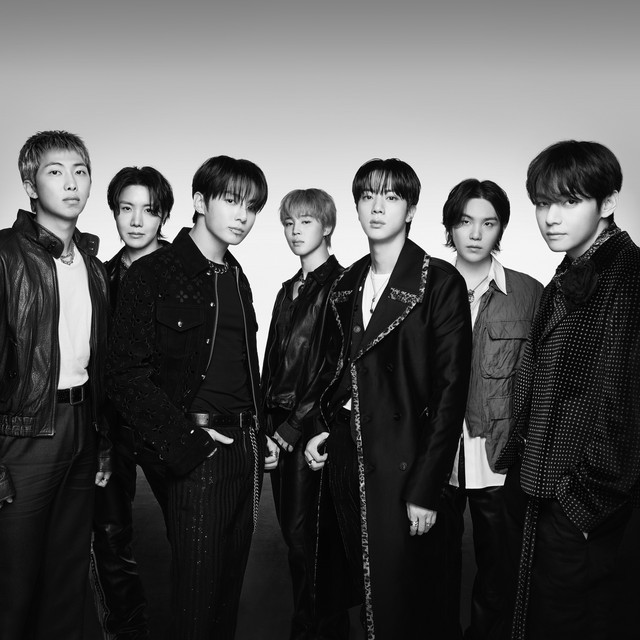
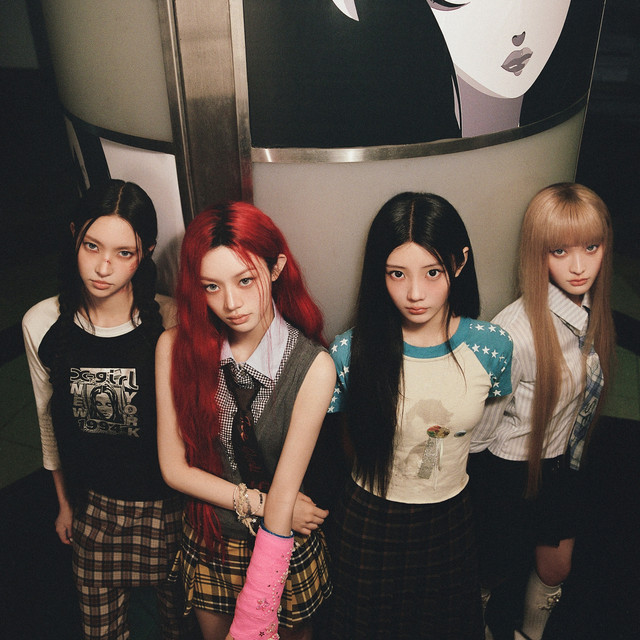
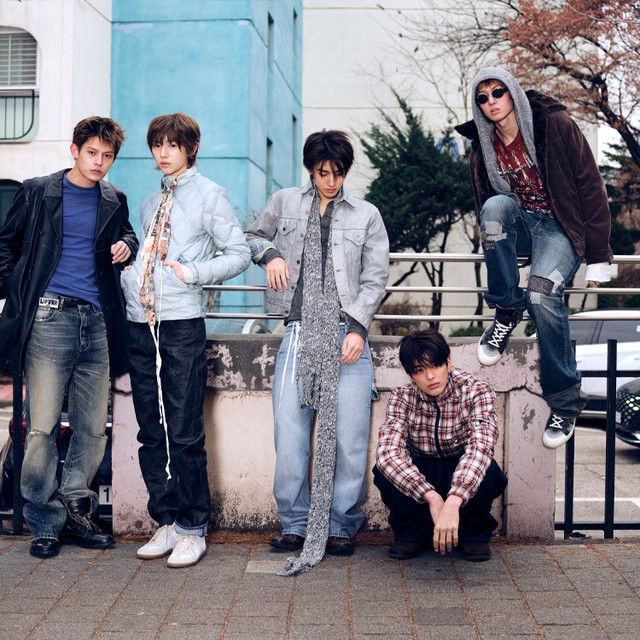
Top K-Pop artists on Spotify
Artists in our catalogue tagged with this genre, ranked by Spotify popularity.





Beyond K-Pop
What else do K-Pop artists play?
The other genre families K-Pop's top artists on Spotify are tagged with.
- K-Pop 89%
- Alternative & Indie 11%
Everything about K-Pop
What Is K-Pop Music?
Korean Pop, K-Pop music in short, is a vibrant and infectious Pop music genre that originated in South Korea.
It's popular for its catchy tunes that blend Korean and English lyrics, impressive K-pop music videos with fun and energetic choreography, plus many charismatic K-pop idols (singers).
At its core, K-Pop is about celebrating individuality, creativity, self-expression, and breaking boundaries by setting new trends, all while having lots of fun with catchy choruses and killer dance moves!
History of K-Pop Music
The history of K-Pop music can be divided into three or four “generations”:
1st generation (1990s - early 2000s) - K-Pop was only starting to gain popularity.
2nd generation (late 2000s - mid 2010s) - K-Pop was starting to hit more and more audiences in South Korea and worldwide, with some popular global hits.
3rd and 4th generation (late 2010s - now) - K-Pop is a mainstream genre with songs frequently in the top charts, and going viral on social media. 3rd and 4th Gen Kpop Groups are most popular today!
The term “K-Pop” was first officially used by Billboard magazine in 1999, but before that, specifically on April 11th 1992, the first official K-Pop boy band, Seo Taiji and Boys, performed live on TV for the first time.
But even before that defining moment, there were Korean pop music bands, like The Kim Sisters in the 1950s, that planted the seeds of modern-day K-Pop Music by gaining recognition in both South Korea and overseas.
In the 1990s, when the genre gained more popularity, K-Pop groups became notoriously highly manufactured.
Only performers who fit strict selection criteria and undergo rigorous professional training could go on to become K-pop idols, especially nowadays when the genre enjoys so much mainstream popularity.
Why Is K-Pop So Popular?
K-Pop is so popular for its catchy song lyrics, impressive music videos and dance performances, plus attractive and fashionable K-pop idols.
There are many K-pop fan bases that unite based on their ‘biases’ (favourite K-pop artists) and songs.
Fans love lip-syncing their songs, learning cool dance moves, choreographing their own dance routines, and taking fashion inspiration from their biases.
5 Most Popular K-Pop Music Videos Streamed on YouTube are:
Gangnam Style (강남스타일) by PSY (5 billion views)
Ddu-Du Ddu-Du (뚜두뚜두) by BLACKPINK (2.1 billion views)
Kill This Love by BLACKPINK (1.9 billion views)
Dynamite by BTS (1.7 billion views)
Boy With Luv (작은 것들을 위한 시) by BTS feat. Halsey (1.7 billion views)
What Was The First K-Pop Music Video?
The first K-Pop music video that was uploaded to YouTube seems to be of the song Catch by Ock Joohyun (2004).
Some of the Most Popular K-Pop Music Groups & Bands Include:
BTS
BLACKPINK
TWICE
Stray Kids
(G)-IDLE
EXO
Some Individual Popular K-Pop Music Artists are:
PSY
Jung Kook
Jimin
JENNIE
JEON SOMI
LISA
Related genres
How much K-Pop is in your Spotify?
See your own top genres, artists and songs as a Spotify pie chart you can share. Free, and it takes seconds.
Get my Spotify pie